

Machinery Regulation 2023/1230: Key Changes for Manufacturers
Machinery Regulation 2023/1230 changes from 20 January 2027: per-unit transition, Annex I Part A and B, partly completed machinery and digital instructions.
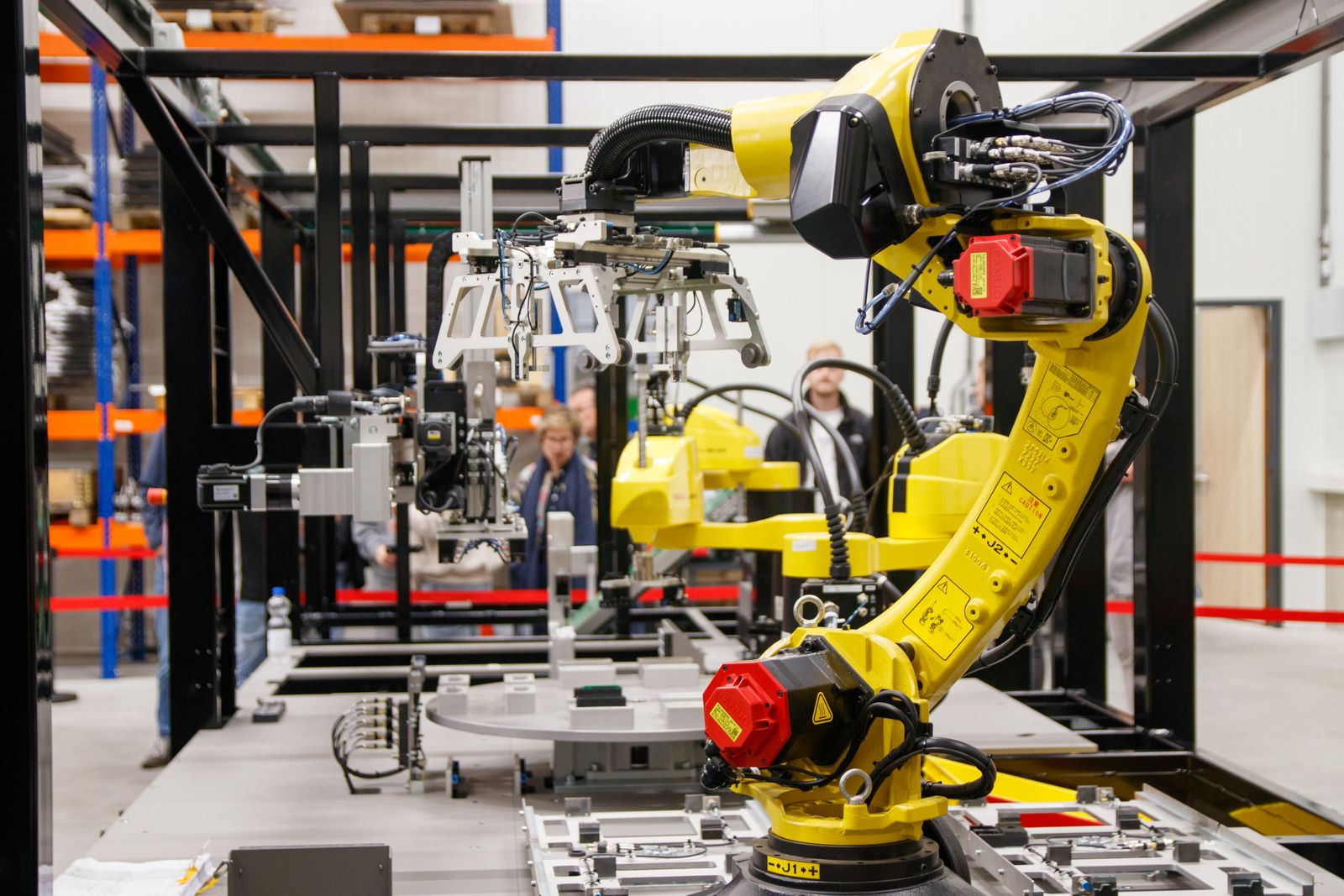
The Machinery Directive 2006/42/EC applies to machines placed on the EU market up to 19 January 2027, and Regulation (EU) 2023/1230 applies to every unit placed on the market from 20 January 2027. The Regulation keeps the risk assessment method and most of the structure, but it changes the legal form, the high-risk list and conformity routes, and adds requirements on software, cybersecurity for safety and machine learning. Instructions, declarations and the technical documentation also change.
Most of your Directive knowledge still applies. The table shows where the two texts differ. Check the consolidated text on EUR-Lex before you rely on details.
| Topic | Directive 2006/42/EC | Regulation (EU) 2023/1230 |
|---|---|---|
| Legal form | Transposed into the national law of each Member State | Directly applicable, same text in all Member States |
| Units placed on the market | Up to 19 January 2027 | From 20 January 2027 |
| Essential requirements | Annex I | Annex III |
| High-risk list | Annex IV | Annex I, Part A (6 categories) and Part B (19 categories) |
| Self-assessment for the high-risk list | Possible for Annex IV machinery when harmonised standards covering all requirements are applied in full | Never for Part A; for Part B only with category-specific harmonised standards or common specifications covering all relevant requirements, applied in full |
| Safety software | Not addressed as a safety component in its own right | Software placed on the market independently can be a safety component |
| Substantial modification | Not defined | Defined in Article 3(16), with consequences in Article 18 |
| Protection against corruption | No dedicated requirement | New section 1.1.9 of Annex III |
| Instructions | In practice supplied on paper | Digital format allowed under conditions (Article 10(7)) |
| Declaration of conformity | "EC declaration", naming the person authorised to compile the technical file | "EU declaration of conformity" per Annex V, Part A; that person is no longer listed |
| Harmonised standards | Long list cited in the Official Journal | Citations needed under the Regulation; first list still expected as of October 2026 |
For a broader overview of the new law, see our guide to the Machinery Regulation 2023/1230 changes.
A directive must be transposed into national law, which created small differences between countries. A regulation applies directly in all Member States (Article 54). Each Member State still decides the language of instructions.
The Regulation was published on 29 June 2023 and entered into force on 19 July 2023. It applies from 20 January 2027, and the Directive is repealed on the same day (Articles 51 and 54). Some copies of the Official Journal text still show 14 January 2027. A corrigendum (OJ L 169, 4.7.2023, p. 35) corrected the dates.
The transition works unit by unit, because placing on the market happens for each individual product. Two rules in Article 52 matter:
The rules on notified bodies (Articles 26 to 42) apply from 20 January 2024. In NANDO, the Commission's database of notified bodies, search under Regulation (EU) 2023/1230: a notification under the Directive alone is not enough for new certificates.
The Directive used "machinery" in a broad sense. The Regulation separates three groups: machinery, related products and partly completed machinery (Article 2(1)). Related products are interchangeable equipment, safety components, lifting accessories, chains, ropes and webbing, and removable mechanical transmission devices.
Two definitions deserve attention:
Annex IV of the Directive becomes Annex I of the Regulation, in two parts (Articles 6 and 25):
Vehicle servicing lifts show the practical effect. Under the Directive, full application of harmonised standards allowed self-assessment. Under the Regulation, they sit in Part A, so that route is closed. Many Part B entries look familiar, but read each one and its conditions again.
One limit is easy to miss. If section 1.1.9 or the cybersecurity parts of section 1.2.1 apply to a Part B machine and nothing under the Regulation gives presumption for them, module A is not available.
The essential health and safety requirements (EHSRs) move to Annex III. The section numbering is similar to the Directive, but the content has changed:
As of October 2026, no harmonised standard covers the cybersecurity and AI-related requirements. You meet them with documented solutions and evidence. Regulation (EU) 2026/1744 has also amended the Machinery Regulation: delegated acts adding AI-related health and safety requirements to Annex III shall apply by 2 August 2028.
Instructions. Digital instructions are allowed if the user can find, print and save them, and if they stay online for the machine's expected lifetime and at least 10 years. A paper copy must be supplied free of charge within one month if the user asks at the time of purchase. Where use by non-professional users is intended or reasonably foreseeable, the essential safety information must also be on paper (Article 10(7)). Section 1.7.4.1 no longer uses the labels "original instructions" and "translation of the original instructions".
Declaration of conformity. The title becomes "EU declaration of conformity", with the content of Annex V, Part A. The Directive required the name and address of the person authorised to compile the technical file. Annex V, Part A does not list this element. The machine can be accompanied by the declaration, or the instructions can give an internet address or machine-readable code where it can be accessed (Article 10(8)).
Marking and contact details. Manufacturers must give a website, email address or other digital contact in addition to the postal address (Article 10(6)).
Partly completed machinery. The concept stays. It must meet the relevant essential requirements, carries no CE marking under the Regulation and comes with a declaration of incorporation (Annex V, Part B) and assembly instructions (Annex XI). See our guide to partly completed machinery.
Technical documentation. Annex IV sets the content. New elements include the source code or programming logic of safety-related software on reasoned request, a description of sensor-fed, remote or autonomous systems and their data, and tests showing safe assembly and putting into service (points (m) to (o)).
Our Machinery Regulation course works through these steps with a full example, and CE Marking Fundamentals covers the wider CE route.
Key points
CE Marking Fundamentals takes you from the EU market rules to your first shipment, with templates and quizzes. Module 1 is free.
Directive 2006/42/EC had to be transposed into national law, while Regulation (EU) 2023/1230 applies directly in all Member States. The Regulation replaces Annex IV with Annex I, Parts A and B, adds requirements on protection against corruption, control systems and self-evolving behaviour, and allows digital instructions under conditions. The risk assessment method stays the same.
Not if they were placed on the market in conformity with the Directive before 20 January 2027. Article 52(1) allows them to be made available afterwards, for example by a distributor. Every unit placed on the market from 20 January 2027 must comply with the Regulation.
No. Presumption under the Regulation needs a standard whose reference is published in the Official Journal under the Regulation (Article 20(1)). As of October 2026, the first list is expected before the end of 2026 and should reuse mostly existing standards. Check the list valid on the day you place each unit on the market.
The Directive required the declaration of conformity to name this person, established in the EU. Annex V, Part A of the Regulation does not list this element. You may still name the EU partner who keeps your file available, and you still need an EU-established economic operator under Article 4 of Regulation (EU) 2019/1020.
This guide is general training material, not legal advice. EU rules and standard citations change: check the latest texts in the Official Journal of the European Union before you decide.
Machinery Regulation 2023/1230 changes from 20 January 2027: per-unit transition, Annex I Part A and B, partly completed machinery and digital instructions.
Free EU declaration of conformity template (Word) with a worked example, the simplified RED declaration, required content and the most common mistakes.
How harmonised standards give presumption of conformity: Official Journal citation, Annex Z scope, editions and cessation dates, restrictions, EN vs ISO/IEC.
Join the waitlist for launch pricing and a free CE applicability checklist. We will only email you about VeridEx courses.
Thanks, you are on the list. We will be in touch before launch.