

Machinery Regulation 2023/1230: Key Changes for Manufacturers
Machinery Regulation 2023/1230 changes from 20 January 2027: per-unit transition, Annex I Part A and B, partly completed machinery and digital instructions.
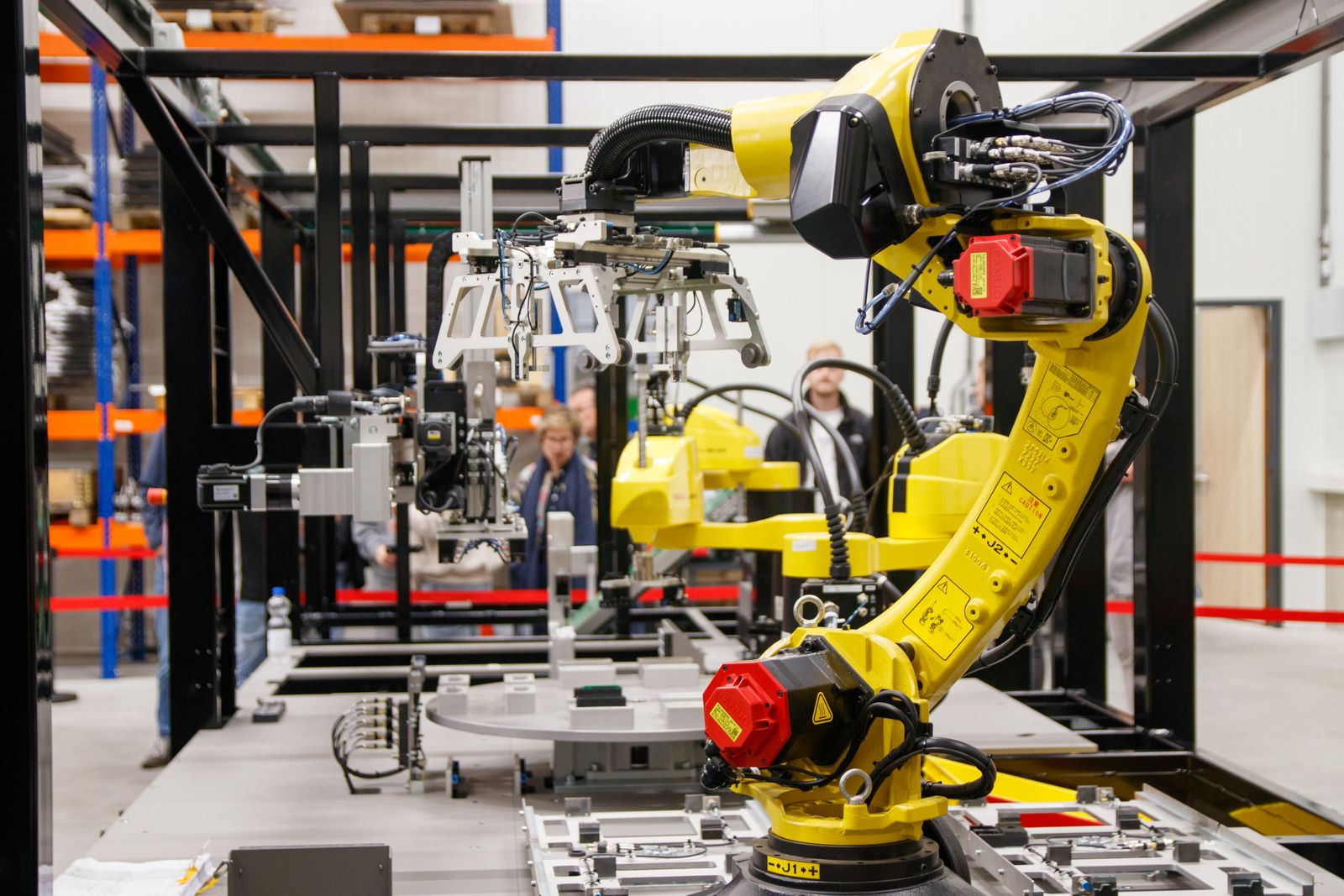
Under Regulation (EU) 2023/1230, a substantial modification is an unforeseen physical or digital change to machinery after it is placed on the market, which creates a new hazard or increases a risk and requires changes to the safety control system or extra stability measures (Article 3, point 16). Under Article 18, whoever carries out such a modification is considered the manufacturer and must carry out a new conformity assessment.
Machines change after delivery. Customers add stations, raise speeds or install new software, and integrators carry out retrofits. At some point the question arises: is this still the original machine, or a new product with a new manufacturer?
The Machinery Directive, Directive 2006/42/EC, did not define this. Regulation (EU) 2023/1230, which applies from 20 January 2027, gives a definition in Article 3, point 16. A substantial modification is:
"a modification of machinery or a related product, by physical or digital means after that machinery or related product has been placed on the market or put into service, which is not foreseen or planned by the manufacturer, and which affects the safety of that machinery or related product, by creating a new hazard, or by increasing an existing risk, which requires: (a) the addition of guards or protective devices to that machinery or related product the processing of which necessitates the modification of the existing safety control system; or (b) the adoption of additional protective measures to ensure the stability or mechanical strength of that machinery or related product".
Two details are easy to miss. "Digital means" are expressly included, so a software change can qualify. Partly completed machinery is not mentioned in the definition. Recital 26 adds that repair and maintenance operations which do not affect compliance with the essential health and safety requirements are not substantial modifications.
For an overview of what else changes in 2027, see our guides Machinery Regulation 2023/1230: key changes and Machinery Directive vs Machinery Regulation.
Article 18 sets the consequence. A natural or legal person that carries out a substantial modification is considered to be a manufacturer for the purposes of the Regulation. That person takes on the manufacturer's obligations in Article 10.
The second paragraph of Article 18 is specific. The person must ensure and declare, on its sole responsibility, that the machinery or related product concerned conforms to the applicable requirements. The person must also apply the relevant conformity assessment procedure in Article 25(2), (3) or (4).
Three further points come from the text:
Note that the Regulation does not limit the obligations to the modified parts alone. The unit of assessment is the machine, or the affected machine within an assembly. Where a change is not substantial, the employer still has duties under national rules on the use of work equipment, based on Directive 2009/104/EC.
The definition contains four criteria. All four must be met. A simple way to screen a change is to answer these questions in order and record the answers.
The fourth criterion is the narrowest. If a simple fixed guard solves the problem without any change to the safety control system, the definition is in most cases not met. Borderline cases under letter (a) are still open to interpretation. The Commission guide to the application of the Regulation is in draft as of October 2026, with publication expected in the fourth quarter of 2026. It is expected to give examples, and it will not be legally binding.
Cost is not a criterion, and neither is who does the work. A change by the customer's own maintenance team, by an external integrator or by the original manufacturer's service department is screened in the same way.
The cases below are not automatic outcomes. Each one needs the four-question test and a documented risk assessment.
A company replaces a relay safety circuit with a safety PLC, adds a robot station, or changes the light curtain muting so that pallets pass more quickly. The work order says "maintenance". If the change was not foreseen by the manufacturer, creates a new hazard or raises a risk, and needs new protective devices processed by a modified safety control system, it is a substantial modification. Whoever did the work is then the manufacturer of that machine.
An update that changes a safe speed, a stopping sequence or a muting logic is a digital modification. Whether it is substantial depends mainly on criteria 2 and 4: was the update foreseen by the manufacturer, and does it require new or changed protective measures in the safety control system? An update outside the manufacturer's planned path deserves a careful look.
A firmware update is pushed to the safety PLC of several machines remotely, nobody runs regression tests of the safety functions, and nobody records the new version. This is first a quality and compliance gap. Annex III, section 1.2.1, point (f) asks for a tracing log of safety software versions uploaded after placing on the market, kept for five years after the upload. Section 1.1.9 asks the machine to identify its safety-related software. If such an update changes safety in a way the manufacturer did not foresee, it may also be a substantial modification.
Section 1.1.9 of Annex III requires protection against corruption. The machine must collect evidence of legitimate or illegitimate interventions in its software or configuration. These records help an owner see what was changed, by whom and when. A configuration change made through a remote connection is assessed like any other digital change. If an intervention, authorised or not, has changed a safety function or its settings, check the consequences for safety with the same four questions.
When the four criteria are met, the person who made the modification follows the same route as a manufacturer under Articles 10, 18 and 25. In practice:
Recital 26 states that the new conformity assessment is carried out before the modified product is placed on the market or put into service again.
Our Machinery Regulation course works through the four criteria with exercises, and CE Marking Fundamentals covers the full CE route for non-EU manufacturers. VeridEx provides training only. For a specific case, check the official text and the Commission guide once published.
Key points
CE Marking Fundamentals takes you from the EU market rules to your first shipment, with templates and quizzes. Module 1 is free.
No. The update must meet all four criteria of Article 3(16). If the original manufacturer foresaw and assessed the update path, installing that update as described is in most cases not a substantial modification. Safety functions affected by an update should still be re-verified and the new version recorded.
Under Article 18, the natural or legal person that carries out the substantial modification is considered the manufacturer. That person must ensure and declare conformity on its sole responsibility and apply the conformity assessment procedure of Article 25. A non-professional user modifying their own machine for their own use is an exception.
No. Directive 2006/42/EC did not define the term. Regulation (EU) 2023/1230 adds the definition in Article 3, point 16, and the consequence in Article 18. The Regulation applies from 20 January 2027.
Only if the modified machine falls in Annex I of the Regulation. For Part A, a notified body is always involved. For Part B, one is needed unless harmonised standards or common specifications covering all relevant requirements are fully applied. Other machinery uses module A.
This guide is general training material, not legal advice. EU rules and standard citations change: check the latest texts in the Official Journal of the European Union before you decide.
Machinery Regulation 2023/1230 changes from 20 January 2027: per-unit transition, Annex I Part A and B, partly completed machinery and digital instructions.
What a CE marking technical file must contain: product description, risk assessment, test reports, supplier evidence, 10-year retention and version control.
Free EU declaration of conformity template (Word) with a worked example, the simplified RED declaration, required content and the most common mistakes.
Join the waitlist for launch pricing and a free CE applicability checklist. We will only email you about VeridEx courses.
Thanks, you are on the list. We will be in touch before launch.